My Dad’s Novel Sat on a Shelf for 60 Years. A Story of How Claude Code and I Published It in 24 Days.
The Manuscript on the Shelf
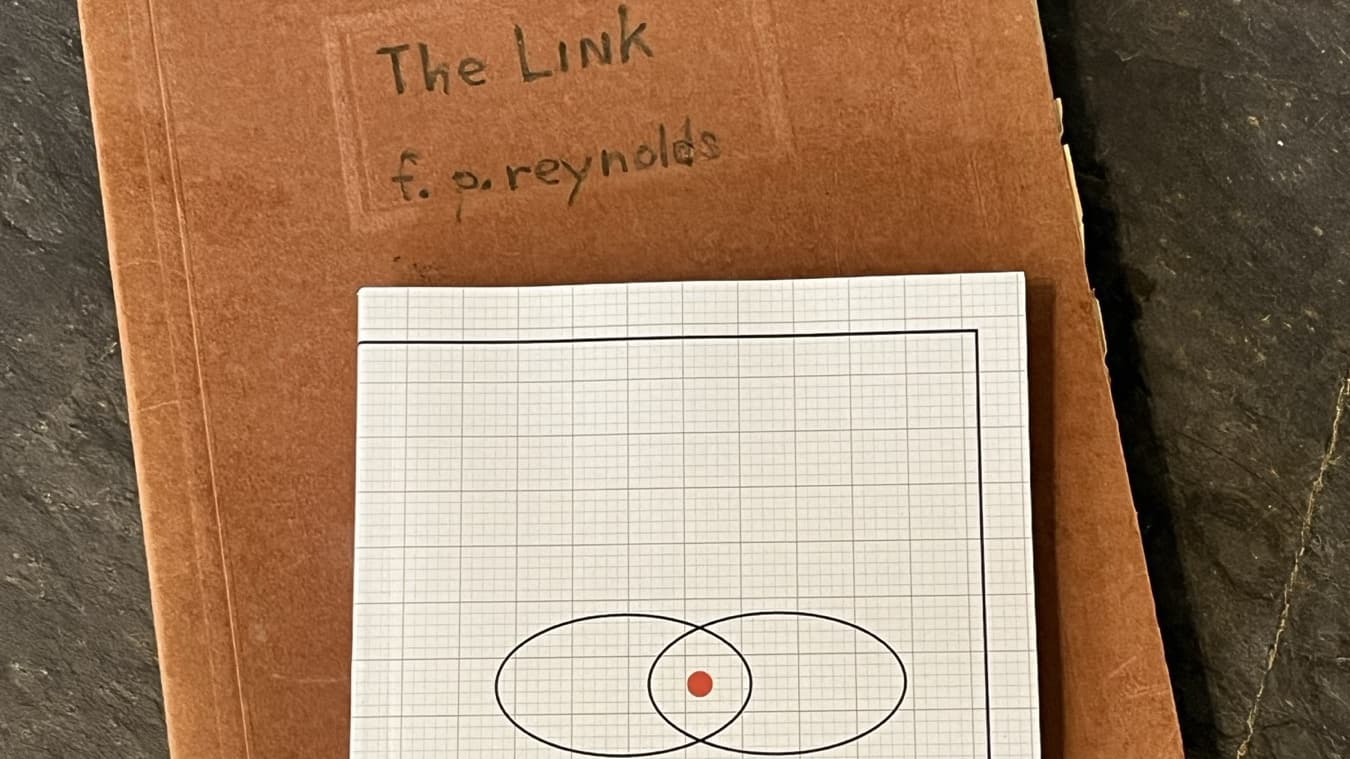
Sometime around 1963, my father, Frank Reynolds, sat down at a typewriter and wrote a science fiction novel called THE LINK. He was about 20. The family story goes that he later ran into Ray Bradbury in a Los Angeles bookstore, pitched him the book, and walked away with Bradbury’s agent’s contact info. Dad mailed the manuscript off. He never heard back.
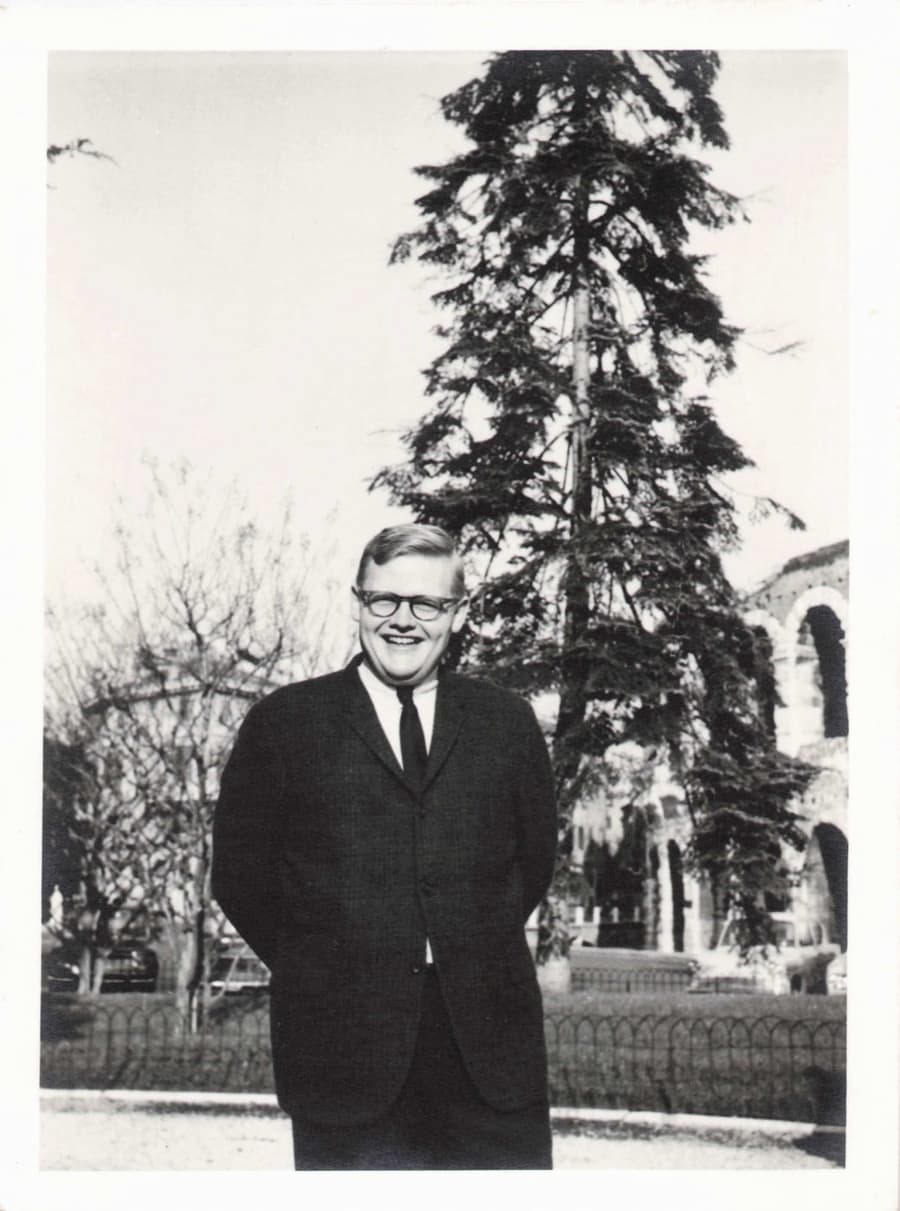
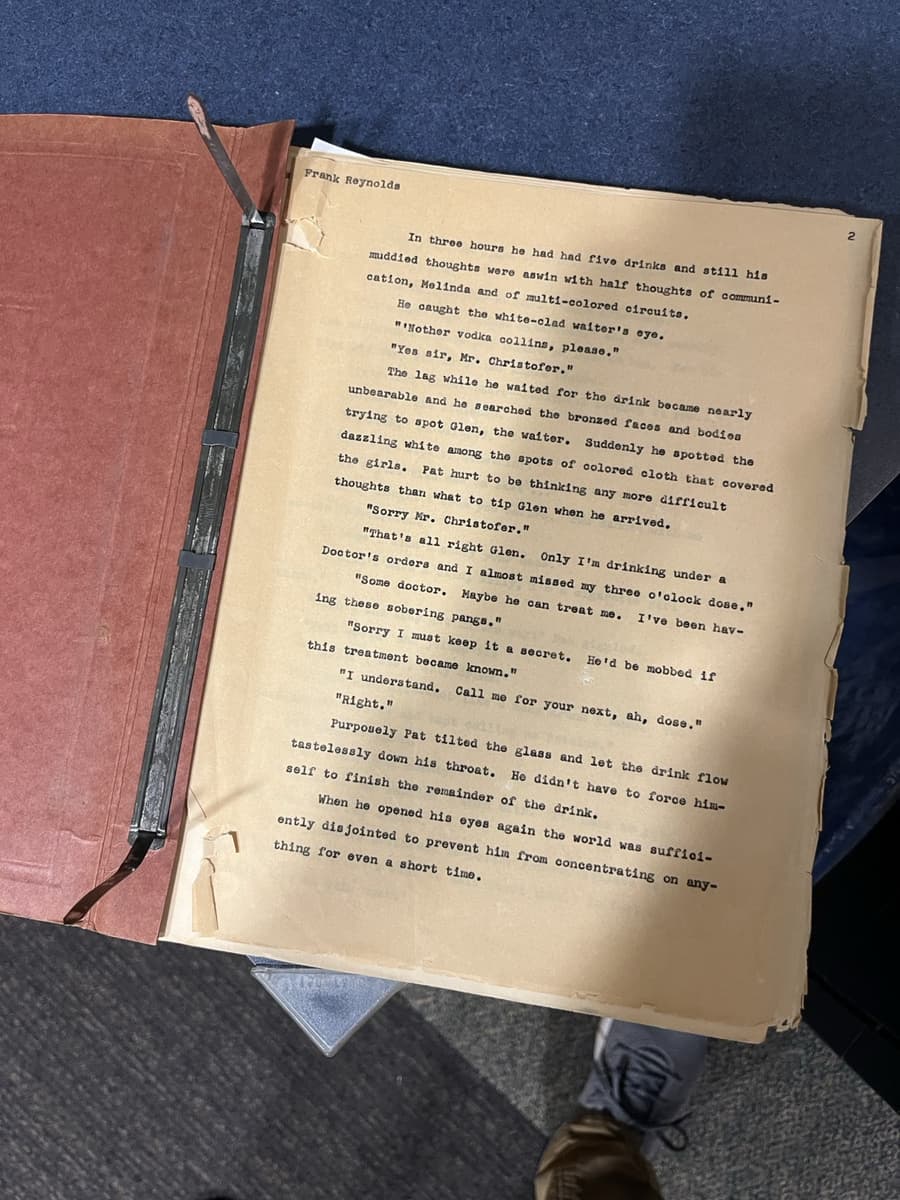
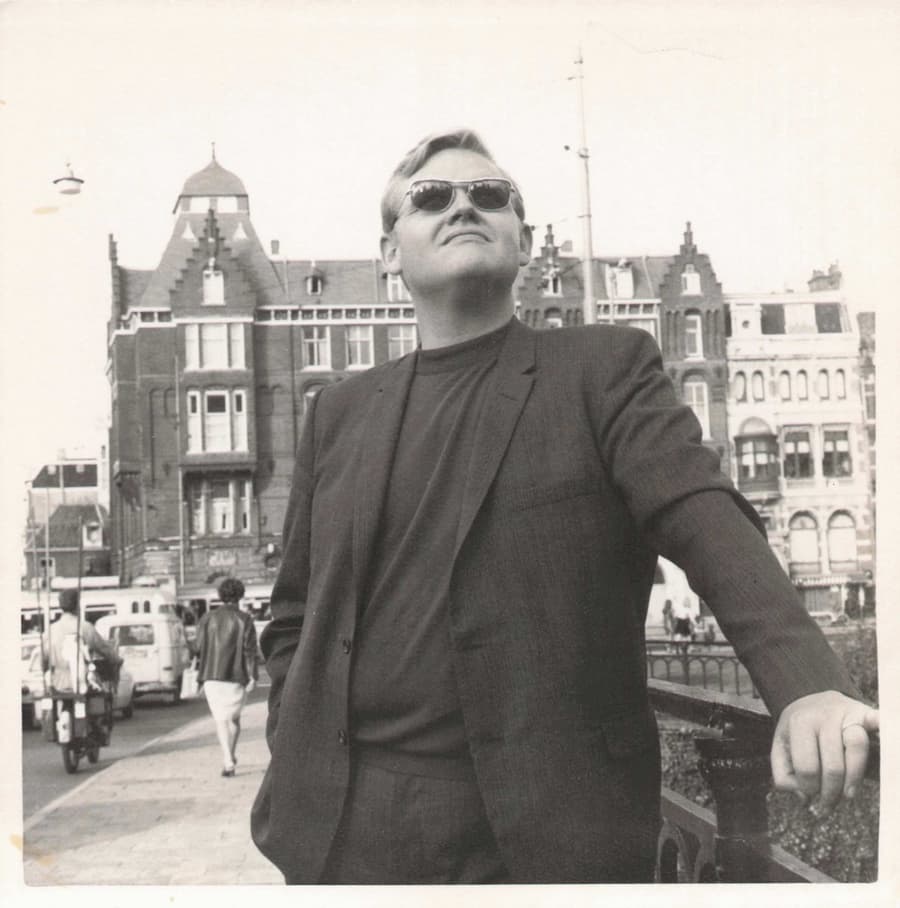
Dad around the time he wrote it, and page 2 of the original typescript.
The typescript lived in his library for the next half century: 229 double-spaced pages, faded handwritten title on the cover, a few folds. I tried to read it as a kid and again as an adult. I never made it past chapter one.
Toward the end of Dad’s life, I fed an excerpt into NotebookLM and listened to its audio summary. Hearing the story told back to me finally got me to read the whole thing. It’s about a man who builds a machine that can think, remember, and read faster than any human, and what that costs the people he loves. A 1960s novel about augmenting the human mind with technology. I decided to publish it, and to use a modern version of that technology to do it.
Step one was fitting: I took the manuscript to a public library and fed all 229 pages through the self-service copier, scanning them into a PDF. Dad loved libraries his whole life, so it felt right that his book’s second life started in one. That’s where the fun started.
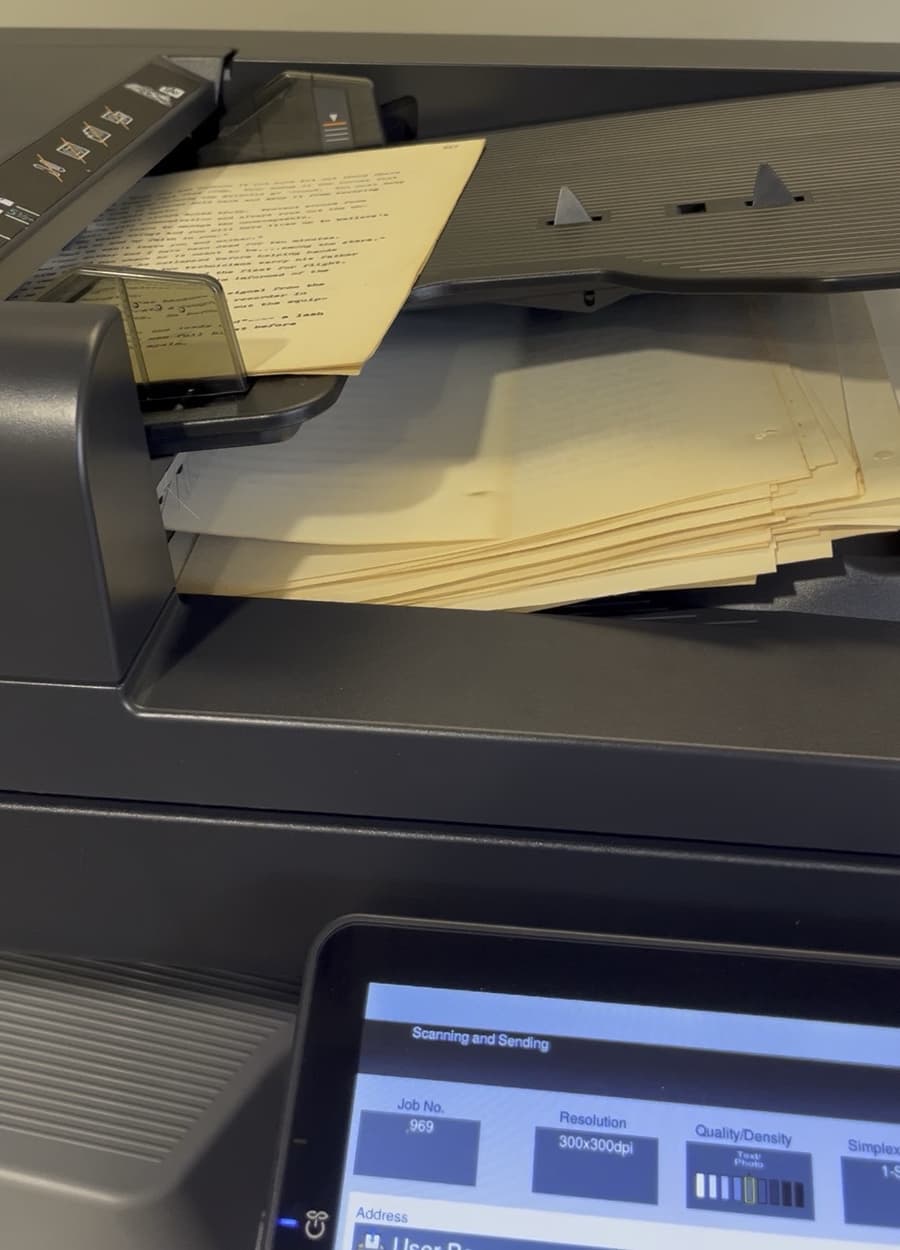
229 pages, one library copier, 300 dpi.
Picking the Tools: Don’t OCR, Read
My first instinct was standard OCR. It’s the wrong tool for a 60-year-old typescript. An OCR engine guesses one character at a time. It can’t tell a faded “e” from a typo the author made on purpose, like the slurred dialogue of a drunk character.
So I used Claude Code, Anthropic’s AI assistant, running locally on my Mac with direct access to the project folder. Instead of OCR, Claude rendered each page as a high-resolution image, then read and transcribed it by eye, the way a human transcriber would. Before Claude transcribed a single page, I set a rule I called the North Star: this is a preservation project, not a copyedit. Dad’s spelling quirks, his dated phrasing, and his grammar all stay. Claude was only allowed to fix actual scanning damage, like a letter broken by a fold or a sentence split across a page break.
The rule paid off right away. A verification pass on pages 31–63 caught one completely missing paragraph and one risky misreading that would otherwise have shipped without anyone noticing. From then on, every batch got checked against the original scans before it counted as done. Claude also kept a page map that traces every paragraph back to its original scanned page. The finished book has every word Dad typed, and nothing was added except the chapter art.
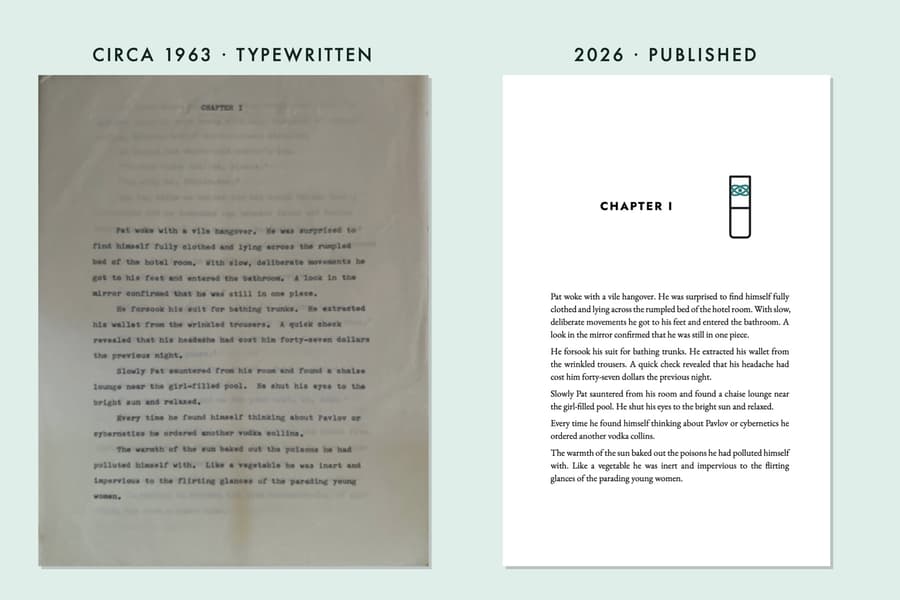
Same words, sixty years apart.
Publishing: You Can Eat an Elephant One Bite at a Time
With a clean manuscript, the job changed from archaeology to production. From the outside, self-publishing looks impossible: ISBNs, copyright, cover specs, printers, distributors, marketing. Two resources did most of the work of turning it into something I could actually finish.
The first is Lori Culwell’s How to Self-Publish a Book. Lori is an Amazon best-selling author, and her guide walks through the whole process step by step while making you laugh along the way. She was also generous with advice as I went. Her playbook of free advance review copies plus a small Facebook ad campaign became my launch plan.
The second is The Self Publishing Checklist, a free, exhaustive list of 41 steps that starts where your finished manuscript leaves off. It’s grouped into seven stages: getting your goals and budget straight, market research, author assets, producing the book, front and back matter, publishing, and post-launch. Every step links to resources that explain how to do it. Its real value is that nothing gets forgotten. When you don’t know what you don’t know, a list that long is a gift.
With those two in hand and Claude as a working partner, the seemingly impossible task became a series of manageable steps. Here’s the path, roughly in order:
- Design. I worked with Claude to generate 13 midcentury-modern chapter sigils in the retro-futurist style Dad would have loved. Claude and I typeset the interior in EB Garamond using Typst, an open-source typesetting tool, which turned 229 typed pages into a 202-page 6×9 book.
- Legal groundwork. I confirmed the copyright chain of title from the actual estate documents, filed the registration with the U.S. Copyright Office, and got a Library of Congress Control Number.
- Identity. I bought my own ISBNs from Bowker instead of using free platform IDs from Amazon. That makes the book look like it came from a real publisher, which matters when you pitch it to libraries.
- Formats and channels. Ebook on Kindle (KDP Select). Paperback on both Amazon KDP and IngramSpark. Hardcover on IngramSpark for library reach, and later on KDP too.
- Marketing. A landing page with a free sample chapter, an email list, advance review copies through BookFunnel, a small paid Facebook campaign, and Amazon A+ Content.
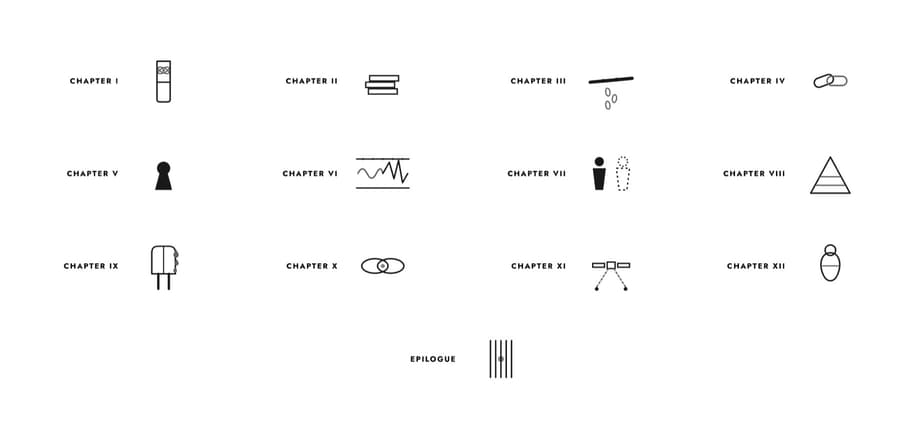
One sigil per chapter, plus the epilogue.
Results
- 24 days elapsed from the first scanned page to the ebook going live on Amazon (Aug 8 → Sep 1, 2026).
- I launched three editions: ebook, paperback, and hardcover, sold through Amazon and IngramSpark’s bookstore and library network.
- Registered copyright, LCCN, and my own ISBNs. THE LINK is now considered a real book with a real publisher of record.
- Reviews are critical signal that a book is “real” to buyers and librarians. I collected 105 email subscribers before launch: 18 from friends and family, 87 from a brief paid Facebook ads campaign, targeted to a likely Advance Reader Copy audience. The campaign was efficient! $59.52 in total ad spend, resulted in about $0.13 per click which yielded a final cost of $0.68 per subscriber who downloaded a copy. Each subscriber is now a potential reviewer and recommendation for the book.
- I got sales! It’s still early days, but ebook, paperback, and hardcover have all sold copies.
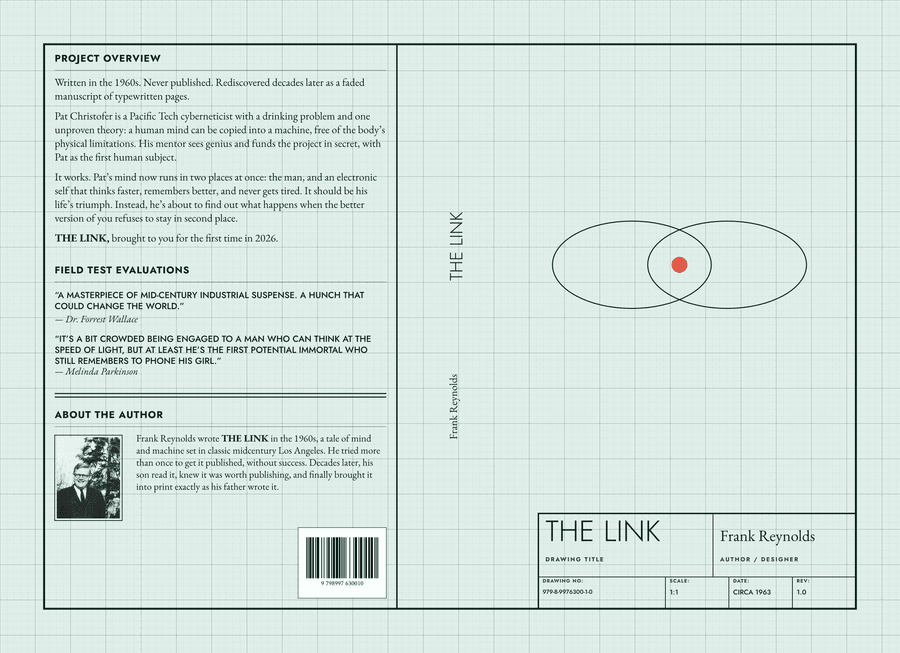
The finished cover: back, spine, and front.
THE LINK is out now.
My father’s novel is available on Amazon in ebook, paperback, and hardcover. If you enjoy it, an honest review means everything to a first-time indie release.
Get THE LINK on Amazon →Most of all, my dad’s book is in the world. Now I’m bringing it back to where it started: I’m visiting libraries in Glendale, where Dad grew up, in Pasadena, where the book takes place, and the SoCal beach community where he lived most of his adult life, and offering them copies for their local authors shelves.
He would have loved that. He’d find it funny that it took his son, sixty years, and a thinking machine a lot like the one he wrote about.
5 Lessons Learned
- Write down what “done right” means before you start. My fidelity rule settled hundreds of small decisions before they came up. Whatever you’re building, write down your North Star first.
- AI is a tireless collaborator, not an autopilot. Claude did the heavy lifting: transcription, typesetting, research, and checking specs. I made the judgment calls. The best results came when I pushed back and asked “are you sure?”
- Verify against reality, every time. A second read caught a missing paragraph. The printer’s previewer caught a bad barcode. A production proof caught a reversed “bottom-to-top” spine title. Assumptions are cheap and re-dos are expensive.
- Small paid experiments beat big guesses. Sixty dollars of Facebook ads brought in almost five times as many subscribers as my personal network. Now I know exactly where the next dollar should go.
- The unfinished project on your shelf is more doable than you think. The tools that exist today turn a lifelong “someday” into a month of focused evenings. Start with page one.
Thanks for reading. If THE LINK ends up on your shelf, an honest review on Amazon helps a first-time indie book more than you’d think. My dad would be thrilled to know you’re reading his words.