How an LLM Helped Me Understand My Father
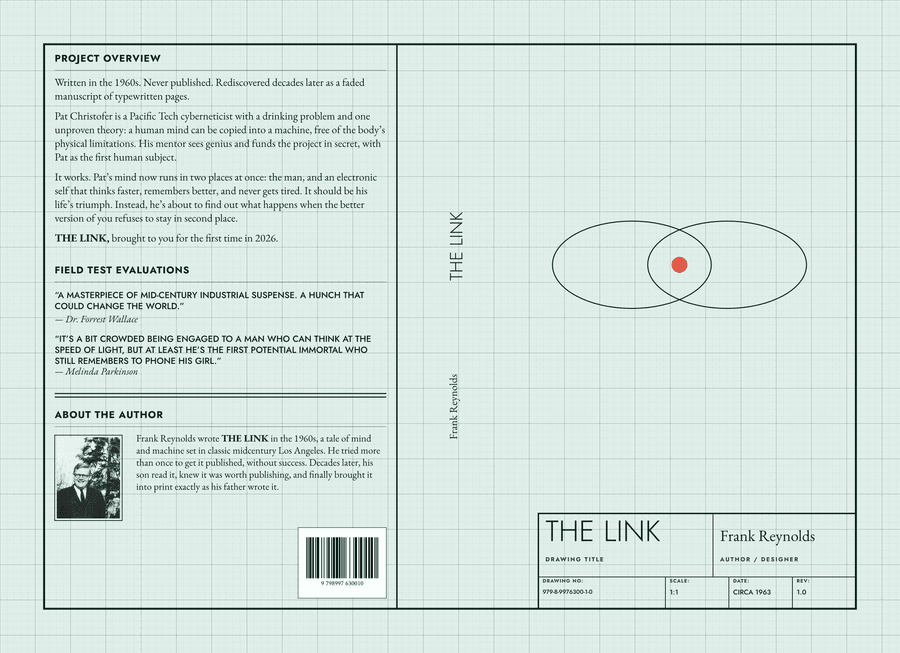
Final artwork for the book’s cover, spine, and back.
I’m posthumously publishing a book my father wrote in his 20s, a half century later.
Frank Reynolds wrote THE LINK in the 1960s. He would have been about 20 years old. He was a voracious reader who loved a good story, and this one lived on his own shelf for decades afterward — one of those books in the house nobody had actually finished, including, for a long time, me.
He tried to get it published. The family lore is that at one point he ran into Ray Bradbury in a bookstore in Los Angeles and, the way any young writer would, pitched his book to him. Bradbury was decent about it — gave Dad his own agent’s contact information. Dad sent the manuscript off. He never heard back.
THE LINK is out now.
My father’s novel is available on Amazon in ebook, paperback, and hardcover. If you enjoy it, an honest review means everything to a first-time indie release.
Get THE LINK on Amazon →I tried to read it myself more than once over the years — as a kid, and again more than once as an adult. I never got past the first chapter. I want to be honest about that, because it’s part of the story: this isn’t a case of a son discovering a hidden masterpiece and devouring it in one sitting. For a long time I just couldn’t get into it.
What changed was, oddly, more technology. As my dad’s life was coming to an end, I remembered his manuscript. Out of curiosity I fed an excerpt into NotebookLM and let it generate an audio summary. Hearing someone else narrate the shape of the story back to me is what finally got me to sit down and read it properly, cover to cover, in his own words.
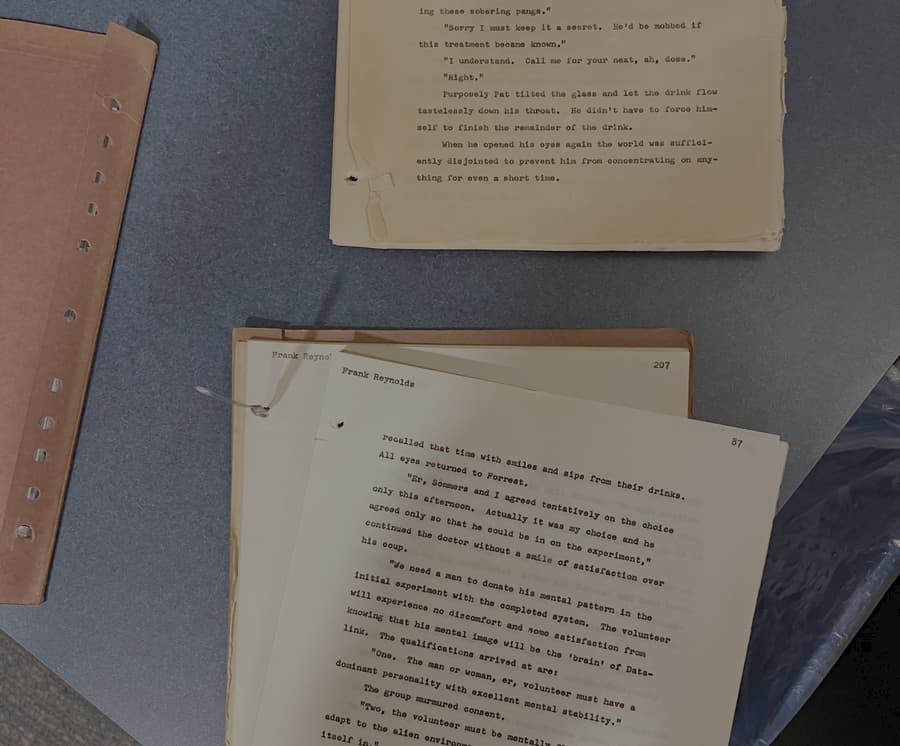
Scanning my father’s manuscript to PDF.
Reading words your parent wrote when they were young feels strange yet oddly familiar. The feeling is amplified when what you’re reading is a novel!
I liked it. More than that, I liked what it was actually about — a man who builds something that can think and remember and read faster than he ever could, and has to live with what that does to the people he loves. His strange, uncomfortable premise is just as compelling in 2026 as 1963. Once I finished the book, I couldn’t leave it on the shelf. I decided I was going to publish it.
There’s something I find funny about how that happened. This is a sixty-year-old novel about a man who uses technology to extend what a human mind can do, and what that costs him. To finally bring it into the world, I used technology too — not to write any of it, but to read it.
I transcribed the whole manuscript from scans of his original typewritten pages, page by page, cross-checking every chunk against the scans themselves so nothing drifted from what he actually typed. Every word in this book is his: his typos, his dated phrasing, his sentences, exactly as he left them. The chapter sigils scattered through the book are the one thing I added — a small attempt to honor the kind of visual style he would have loved.
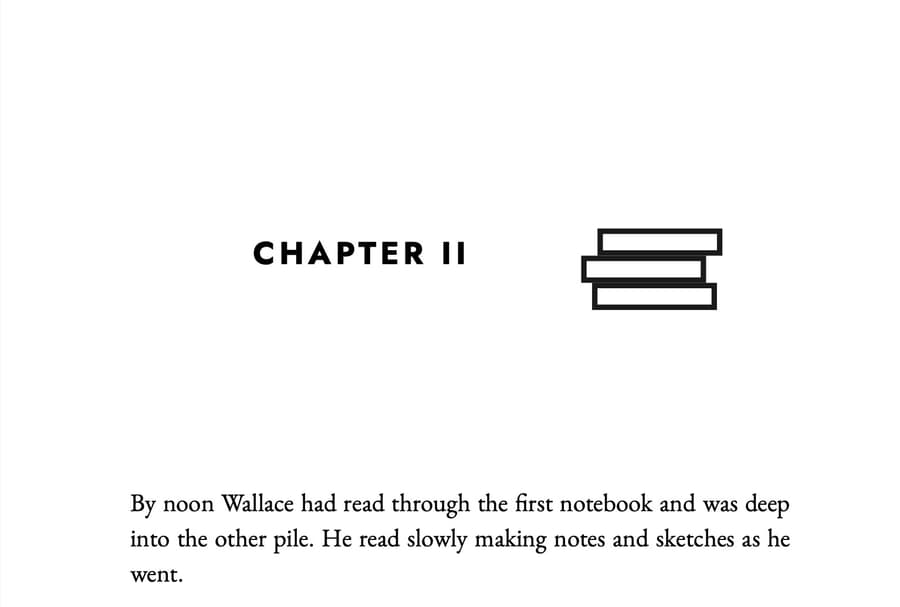
I used Claude Code and Python to transcribe the text and add a sigil to each chapter heading.
He tried once, in a bookstore in Los Angeles, and it didn’t work out. I don’t know what he’d think of the fact that it took his son many years, and a very different kind of technology than the one he wrote about, to finish what he started. I like to think he’d find it funny too.
My dad would be thrilled to know that you’re reading this. Thank you.