A Surprising Conclusion About the Future of Your Smart Digital Assistants
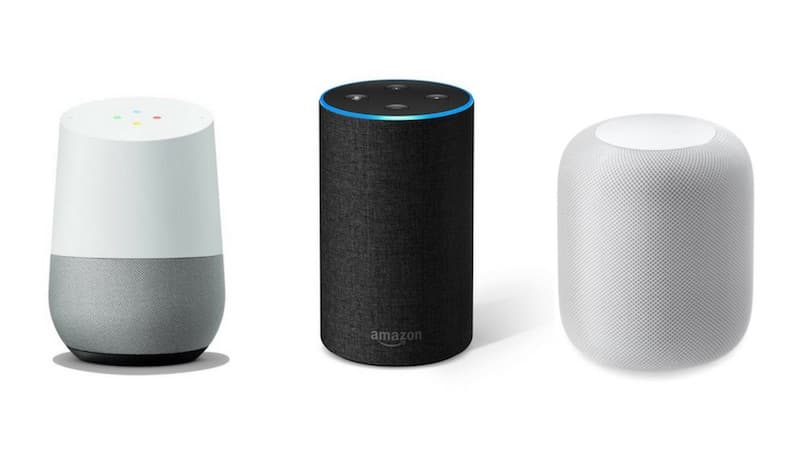
Tonight I’m writing this from an undisclosed location deep in the heart of Silicon Valley, CA where I have a PM Interview at one of Scott Galloway’s “The Four.” Wish me luck! During my preparation, I spent a lot of time on the Product Design question and evaluating products I use, products I like, and products that I think need improvement.
A Product Design Question
I’ve been thinking about Smart Digital Assistants a lot lately. They have a huge installed base on our phones and OTT TV devices in the form of Siri, Google Assistant, Alexa, and Cortana. Per Statista, as of February 2018, 20 percent of U.S. WiFi households own smart speakers with personal assistants. Furthermore, it appears that per a Venturebeat survey, approximately 75% of persons who interact with their digital assistants do so at least 1x/day.
Impressive, right? I dug a little deeper and numerous sources revealed that the majority of use cases today are for simple tasks like playing a song, checking the weather or asking for information. Per the Pew Research Foundation, “54% of the daily users primary use case is to set a timer without using their hands.”
Great.
Some of humanity’s best and brightest engineers and PMs architected and organized an absolutely mammoth amount of Machine Learning, AI training, hardware design plus enough raw client and server side computing power to put the world’s information in people’s hands in less than 700ms and half of us are using it as a voice-enabled oven clock.
Why Aren’t We Using Our Assistants More?
Let’s use a Product Design Framework to think this through:
What is the goal of different Digital Assistants?
- Per Google, the Google Assistant is “a conversational, voice-activated digital assistant that can perform actions on behalf of a user and provide contextual information.” But it is the linchpin in Google’s AI-first strategy for the future, and will likely come to define how users interact with almost all of Google’s core products.
- Per Amazon—according to Amazon’s devices head David Limp in 2016—Alexa’s ultimate goal is to become an all-out shopping machine.
- Per my analysis of Apple’s behavior with Siri as of late, and from this March 2018 ComputerWorld article, Apple’s goal for Siri is to sell premium speakers.
Alright, 1 out of 3 sounds inspiring to me. The other two are meh. Let’s continue with the framework.
What problems do Digital Assistants face?
- Do we need to expand the user base? Actually, I think the user base is fine.
- Do we need to increase user engagement? Yes, we’ve built massive backend capabilities to process information and I surmise they’re hardly being taxed. Its almost insulting to our new overlords. And I contend a machine needs a training set to learn properly…
- Do we need to increase conversion from casual users to power users of Digital Assistants? Yes, I think we should encourage our users to interact with their Digital Assistants in a manner that yields results more impactful than setting an alarm.
How would I solve the problem?
Let’s fix the underutilization. I believe—at least in my own experience with Siri—that “people don’t ask much of their digital assistants because they’ve shown us don’t seem to be able to do very much for us”—they’re generalists: Look up an item, add to cart (Alexa), look up the latest score, or reference from the web (Google), or play the wrong live version of a song from Apple Music (Siri). Our expectations were high, and then dashed. Digital Assistants are perceived as toys with a brief novelty and we barely involve them in our lives. We give them trivial tasks. They let us down and a cycle of lesser expectations deepens.
Here’s a very interesting train of thought I’ve been having. Let’s see if I can put this down in a cogent manner:
If AI is the strategy for the future—I mean reality, not marketing materials—then we need to understand what makes AI actually work. And if Digital Assistants are so readily used in a trial context (who hasn’t asked their assistant a silly question?) why not use these as input devices for what I propose is an ultimate use case.
So flip the narrative: Our Digital Assistants are not all-knowing, all powerful entities—yet. They need our help. They’re children.
How I would implement a solution
I recommend that we branch a version of Google Assistant, or Siri, or Alexa and code name it Phoenix. Your role as a user is going to change.
You’re the teacher.
You see, you’re going to have a personal student—you’re going to train it how you ask questions, and you’re going to give it feedback. You’re going to develop a relationship with your student who will grow into a highly personalized, ever-increasingly aware and helpful version of a personal Digital Assistant that is no longer one-size-fits-none, but one instance fits you.
So just like Phoenix tutored Achilles, you’re going to be an important part of the creation and nurturing of your own assistant that does your bidding, anticipates your needs and wins battles for you.
How will we validate this solution?
OK this one is out there, and its high risk/high reward. Let’s identify a set of user/tutors who would be good for the job:
- The elderly — they could use someone to talk to
- High school students — they could use help with their homework
- Silicon Valley VCs — what better bragging rights than “my assistant scored higher than yours”
We should pick one cohort.
I think this is the beginning of a longer post, and it’s time for bed. Just wanted to jot this down instead of blurting it out tomorrow with no structure. Wish me luck!
Edit: I got the job.