7 Product Management Lessons from Learning to Fly
I’m an unabashed aviation geek and analogy addict.
After decades of “life getting in the way” I finally started flight training in earnest this year, completing my first solo on June 26th, 2017. Flight training is an intensive, holistic exercise in learning a set of skills that are nothing like anything you’ve done before with training based completely on attention to detail and learning from failure.
Just like Product Management!
Often we hear people describe the product manager as a mini CEO of their product. That’s accurate in some ways since the PM is ultimately responsible for the product from vision & strategy to execution and user adoption. I like to think of the Product Manager as pilot in command because—just like a team of individuals—the airplane is the sum of its parts, has its own handling characteristics and most importantly, could end up flying you if you’re not vigilant. Complacency kills products—and pilots!
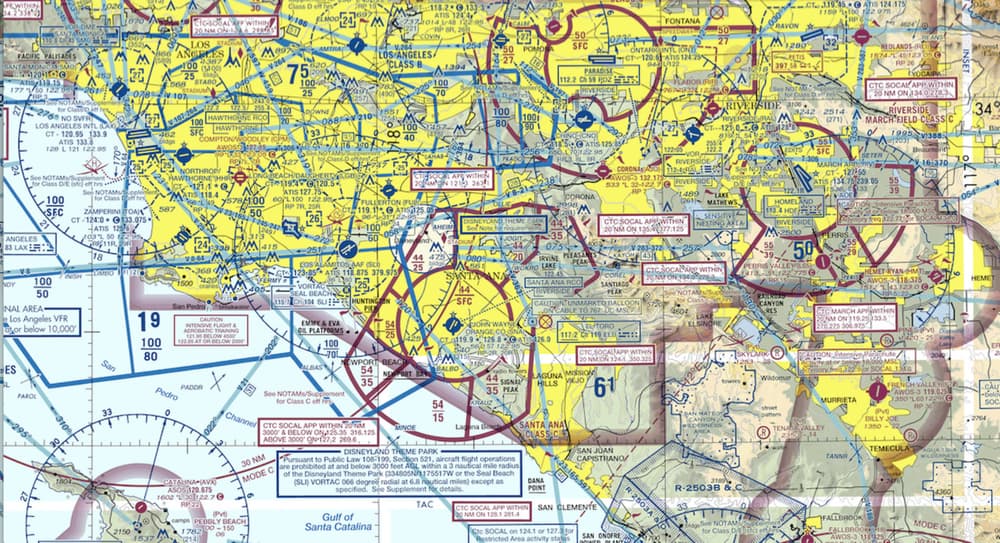
Thinking back to that happy, sunny day in June, there was a moment when I suddenly remembered while 856 feet above John Wayne Airport, being pilot in command means you’re ultimately responsible for everything that happens next. I could see the white shirt of my flight instructor on the ground vigilantly watching me with her radio. It was up to me to get back down on the ground.
With this experience in mind, here are 7 lessons from flight training that I believe could make you a better product manager.
1. Attitude + Power = Performance
Attitude flying is the method used to maneuver and maintain control of the airplane, regardless of whether you use the outside horizon or airplane instruments. The FAA’s Airplane Flying Handbook recommends teaching basic flight maneuvers using a method that integrates outside visual references with cockpit instruments. If you want to ascend, apply full power and point upwards. If you want to descend, reduce power. The airplane’s particular characteristics ultimately decide the rate of change but this equation is your primary method to effect change.
2. Look out the Window
Building upon #1, student pilots often spend too much time staring at the instruments, neglecting the wealth of information provided by looking outside and referencing the aircraft’s attitude in relation to the horizon. The problem is compounded lately as more and more airplanes are equipped with fancy computerized instrumentation. The human eye is drawn to movement. We’re getting better at measuring things with precision but how many times have you fixated on a particular metric to the detriment of your situational awareness? On one of my first flight lessons my instructor covered up the instruments forcing me to rely on outside references only.
3. Aviate, Navigate, Communicate
In the aviation world, this is a common approach to all flying situations, especially emergency conditions. Aviation studies have found that pilots get so focused on solving a problem in an emergency that they sometimes forget to fly the airplane. A product scrum team, like a properly trimmed airplane in level flight has a certain equilibrium. Things are at a familiar rhythm. If you’re out of equilibrium unexpectedly, take action but think about the order of your actions the next time something goes wrong during a release or earlier in your product development lifecycle. Often we get it backwards!
4. Brevity
Almost every radio transmission you will make as a pilot follows this simple pattern: Who you are, Where you are, What you want to do.
5. Fly with a Light Touch
Pilots, like PMs should always have their hands on the controls. A mistake many student pilots make is to maintain an intense “kung fu grip” on the yoke. The nuances of flying the airplane through different phases of flight requires the pilot to detect—and correct—subtle changes early before they become larger problems requiring larger corrections. An experienced pilot who knows their aircraft typically flies it with their thumb and forefinger of one hand. This is possible because a properly trimmed airplane is flying at equilibrium and is inherently stable in this configuration. Think about this in terms of vacation or PTO: A product manager that hasn’t “trimmed” their airplane for its phase of flight would never be able to take a rest period!
6. Static & Dynamic Stability
Most aircraft are built with stability in mind, but that’s not always the case. Some aircraft, like training airplanes, are built to be very stable. But others, like fighter jets, tend to be very unstable, and can even be unflyable without the help of computer controlled fly-by-wire systems. Static stability is the initial tendency of an aircraft to return to its original position when it’s disturbed. This is really useful for beginners! But let’s think of this in terms of products in a start up versus a well established company: Stable aircraft, like Cessna and Piper training aircraft, are built to be statically and dynamically stable, making them easy to trim and fly ‘hands off’. However, military jets like the F-16, are actually designed to be unstable, making them highly maneuverable and easy to pitch, roll and yaw aggressively. Is your product scrum team a 110kt bug smasher or a loud fire breathing beast that can turn 180 degrees with full afterburner?
7. License to Learn
Student pilots typically put in hundreds of hours of training which culminates in a required Federal Aviation Administration “checkride” which is a combination of an oral and practical test after passing the FAA written exam. For well-trained students, this checkride—while potentially nerve wracking—is essentially a practical test of 100+ years of knowledge. A well-prepared student will pass and at that point they’ve earned a license to learn: What comes next is not an end, but instead a beginning.
I’m about two-thirds of the way through my flight training. These are some initial lessons I’ve learned that I feel are applicable for you as either an aspiring or practicing product manager.
Thanks for reading!